
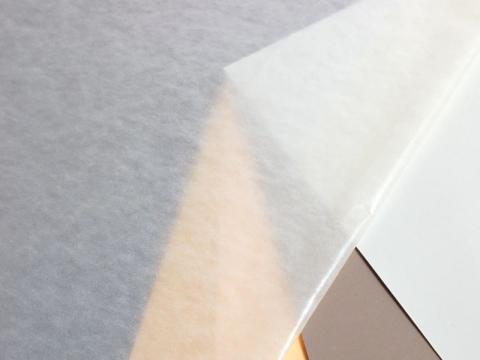
- Grammage: 40 gsm, 50 gsm
- Colour: White and yellow
Glassine silicone paper is a dense, smooth glassine base paper coated with food-grade silicone to give a clean, non-stick release surface. It is the working base behind baking-release liners and clean-release food packaging — the stock converters slit, cut and die-cut into finished sheets for bakery and food-service lines.
As a paper supplier and sourcing partner, Bofeng offers food-grade siliconized glassine on rolls, in common food-paper grammages and colours. Tell us your converting process and target end use, and we will match grammage, colour and release level to your line.
What is glassine silicone paper
Glassine starts from finely beaten pulp, supercalendered into a dense, smooth, semi-translucent sheet. The compact sheet resists oil and grease on its own and carries an unusually even, smooth surface. Coated with food-grade silicone, it gains a clean-release face: baked and sticky foods lift away without sticking, tearing or leaving residue. The difference from a general food silicone paper is this dense glassine carrier, which takes an even coating and cuts cleanly — and the difference from plain glassine is the silicone face that provides the release.
Key material properties
- Dense, smooth glassine base. The supercalendered sheet is compact and naturally oil- and grease-resistant, and its smooth surface carries an even silicone coat.
- Clean non-stick release. The food-grade silicone surface releases baked and sticky foods cleanly — in most baking uses without added oil or grease. Release level (light, medium or heavy) is matched to the converting line and the end use.
- Baking heat performance. Silicone-coated glassine performs reliably at the heat of ordinary baking and heat sealing; the working temperature ceiling depends on the base grammage and coating, so the grade is selected for the end use.
- Converting and printing. The sheet slits cleanly to roll widths, cuts to sheets or die-cuts into finished liners, and runs on automated packing lines.
- Food-contact safety. Food-grade materials meet international food-contact safety requirements; supporting documentation for compliance review is available offline on request.
Supply forms and options
- Rolls, white or yellow, 40 and 50 gsm.
- Other grammages, slit widths, printing and release-level options on request.
Typical end uses
Food-grade siliconized glassine is commonly converted into:
- Baking tray and sheet-pan liners, and release sheets under bread, buns and pastries
- Liners for baking tins and moulds
- Interleaving and release sheets for confectionery, chocolate, frozen dough and sticky foods
- Clean-release paper for food wrapping and light food-service use
For label and industrial release work that is not food contact — pressure-sensitive label liners, adhesive and tape protection — dedicated glassine release papers are the usual choice. See also the related glassine and silicone-paper pages: Food-grade Silicone-coated Paper · Glassine Release Paper · Glassine Paper.
How to order and choose
Food-grade siliconized glassine is supplied by grammage and roll width to match a converting line. For baking-paper producers, food-packaging converters and release-paper converters we stock the common food-paper grammages in white and yellow and slit, cut or die-cut to order. Request samples to trial on your own line — tell us the end use, the format (roll or sheet) and the grammage you need, and we will recommend a starting grade.
Bofeng New Materials supplies food-grade siliconized glassine paper on rolls to baking-paper producers, food-packaging converters and release-paper converters worldwide.
Request samples or a quote: jason.zhan@bofmat.com
Related: Glassine Silicone Paper · Food-grade Silicone-coated Paper · Glassine Release Paper · Glassine Paper