
What Is Vegetable Parchment Paper (and When Not to Use It)
Order vegetable parchment by four auditable numbers — grammage, peak/continuous heat, a grease grade and a food-contact declaration — and decide roll vs pre-cut by your tray mix.
Read more Silicone-Coated Paper: Single- vs Multi-Use by Coating
Select silicone-coated paper by the reuse cycles and heat you need, from the coating type and coat weight — treat "reusable" as a spec, not a default.
Read more Baking Paper vs Greaseproof Paper: Which to Specify
Pick baking paper for anything that enters an oven and greaseproof for wrapping that stays cold; one line carries heat, the other carries oil at room temperature.
Read more Kraft Paper Bags: Choose Grammage and Bottom by Load
A kraft bag is carried by grammage, bottom type and how it is lifted; spec weight and bottom to your heaviest routine load and confirm with a lift test.
Read more Glassine Paper Bags: The Glossy Option for Dry Goods
Glassine paper bags suit dry, glossy goods; they soften under oil or moisture — use a greaseproof bag once the content turns wet.
Read more Cold-Resistant Labels for Frozen and Chilled Packs
Applying to a frozen pack is far harder than applying to a warm one and then freezing. Many adhesives rated for −40 °C storage still have to be applied above freezing.
Read more Flame-Retardant Labels: Where They Are Required
A heat-stabilised PET that survives 200 °C in a drying oven will still burn if you put a flame to it, and a flame-retardant label can soften at 80 °C. Two questions, not one.
Read more 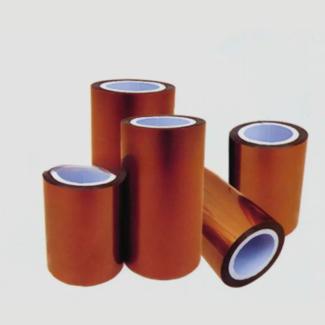
PI Film Labels for High-Temperature and Electronics Use
The question is not whether PI is good, but whether the temperature is continuous and the label also has to insulate or stay dimensionally fixed. One yes on its own rarely justifies the price.
Read more Waterproof Labels for Wet and Wash-Down Environments
The most common field failure is a label whose facestock is perfectly waterproof but whose adhesive lets go the first time it is washed. Facestock, adhesive and print each have to survive the water.
Read more Anti-Counterfeit Labels: How Authentication Features Work
A hologram that stops a photocopier does nothing against a distributor re-applying peeled labels. Anti-counterfeit protection is a match between a threat and a feature, not a product you buy by name.
Read more Frangible Labels for Tamper Evidence
A frangible label is chosen by what it leaves behind, not by how easily it tears. One shatters into flakes and leaves a ghost; another peels away as a single strip and leaves nothing.
Read more Film Label Facestocks Compared: PET, PP, PE and PVC
The film that resists solvents best is also the stiffest, and the one that wraps a small curved bottle softens first in heat. There is no all-rounder among PET, PP, PE and PVC — rank the properties instead.
Read more Search form
Business Contact
Contact:Jason Zhan
Tel.:+86-0138-2418-2115
Email:jason.zhan@bofmat.com