
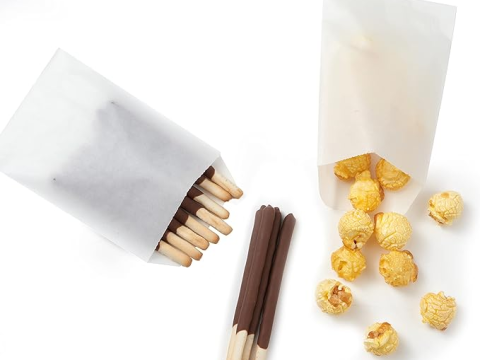
- Grammage: 17–40 gsm typical; other weights on request
- Light transmission: about 70–80%
- Colour: bleached white, natural white
- Finish: supercalendered, dense and smooth
- Form: rolls (master or slit) or sheets
- Options: printed or cut to your line, on request
Glassine paper is a high-density, supercalendered specialty paper with a naturally translucent, smooth surface. Supercalendering compresses the sheet until it is dense, glassy and see-through, while the compact structure keeps oils and grease from soaking through. Because the transparency comes from the calendered paper itself, glassine is supplied plain — without a silicone coating — and that uncoated, high-transparency character is what defines the grade.
As a paper converter, Bofeng slits, rewinds and sheets glassine to your specification — in rolls or sheets, in bleached-translucent and natural-translucent whites. Tell us the format you need and the end use, and we will match grammage, colour and slit width to your line.
What is glassine paper
Glassine starts as a wood-pulp sheet that is heavily refined and then supercalendered — passed between hard, polished rolls — until it becomes a dense, compact, translucent paper. The result is a very smooth, uniform sheet with clear see-through quality and natural grease resistance, in grammages light enough for wrapping and interleaving. Paper of this grade is typically supplied between 17 and 40 gsm, and a supercalendered sheet usually passes roughly 70–80% of light — enough to read the contents through the wrap, dense enough to hold grease back. It is chosen for its transparency and clean, glassy look rather than for non-stick or heat performance, which is the role of the silicone-coated grades.
Key material properties
- High density. The dense fibre structure resists grease and oil wicking, so oily items leave the surrounding layers and packaging clean.
- Translucent, see-through surface. The smooth, low-haze sheet keeps contents visible through a wrap — useful wherever the product needs to be seen.
- Smoothness and converting. The uniform surface prints cleanly and can be slit to roll widths, cut to sheets or die-cut into separators and liners on automated lines.
- Strength in light grammages. The compact sheet keeps good tensile strength and stiffness even at low basis weight, so it runs well on high-speed wrapping and interleaving machinery.
- Food-contact suitability. Food-contact-suitable grades can be supplied for direct-contact interleaving and wrapping; compliance documentation for review is available offline on request.
- Bleached and natural whites. The grade comes in a bright bleached white and a warmer natural white. The natural shade can be made without optical brighteners, and that is the version normally specified where the sheet goes into direct food contact.
Supply forms and custom converting
- Rolls or sheets, in bleached-translucent and natural-translucent whites.
- Typical grammage range 17–40 gsm — lighter sheets for wrapping, heavier ones for liners and covers.
- Custom grammage, slit widths and sheet sizes; printing on request.
Glassine is slit, rewound, sheeted, printed or die-cut on our own converting lines in Zhuhai and Chaozhou.
Tell us the process the paper enters and the form you need; grade, grammage and tolerance are confirmed before quoting. Custom paper converting
Custom product: Glassine Paper Bags. For glassine bags, confirm the paper appearance, bag dimensions and closure for the packed goods.
Typical end uses
Because it is dense, translucent and grease-resistant, glassine is commonly converted into:
- Separator and wrap sheets for chocolates, candies and other confectionery
- Interleaving for pastries, cookies and cakes in boxes and display trays
- Tea and dried-fruit wraps where the contents should stay visible
- Silk, textile and leather-goods interleaving in retail packing
- Cold-food and delicatessen portion separators
- Liner and interleaving papers for pharmaceutical, medical and cosmetic packaging
- Protection and interleaving for precision parts and metal surfaces
- See-through interleaving and cover papers for stationery, archival and craft use
Converted on our own lines, this paper is also supplied as slit rolls and sheets for dry-goods counters, bakeries and delis.
Glassine is chosen for separation, lining and see-through wrapping; when the end use calls for a non-stick or heat-tolerant surface, the silicone-coated glassine grades handle that role. See also the related glassine and release-paper family pages: Glassine Release Paper · Glassine Silicone Paper · Release Base Paper.
How to order and choose
Glassine is supplied by grammage and width to your specification. For confectionery wrappers, food interleaving and industrial liner papers, we stock the common bleached- and natural-translucent grades and slit, cut or sheet to order. Request samples to trial on your own line — tell us the end use, the format (roll or sheet) and the grammage you need, and we will recommend a starting grade.
Bofeng New Materials supplies glassine paper — dense, supercalendered, translucent and uncoated — in rolls and sheets to packagers, printers and brand owners worldwide.
Request samples or a quote: jason.zhan@bofmat.com
Related: Glassine Paper · Glassine Release Paper · Glassine Silicone Paper · Release Base Paper