
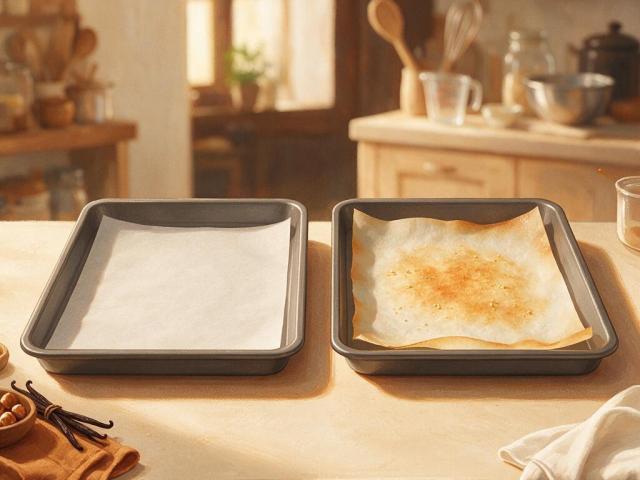
Silicone-coated paper is a base paper with a thin release layer of silicone applied on one or both sides. That release layer is what makes it non-stick, and it is also what decides how many times you can reuse a sheet. The common assumption—"silicone paper just withstands high heat"—misses the point. Coating type, coat weight and base paper together set both the temperature window and the reuse life. Choose by the number of cycles you actually need, not by classifying the product loosely as "silicone paper".
What the coating does
Silicone is applied to a base parchment or barrier paper at very low coat weights (typically measured in grams per square metre of coating). That thin layer stops baked goods or sticky foods from bonding to the sheet and gives the easy peel that parchmentised paper alone cannot fully match on repeated use.
Two variables matter most:
- Single- vs double-side coating. Double-sided adds release on both faces; single-sided covers release on the food side with lower coat usage for wrapping.
- Coat weight and formulation. Heavier silicone coating generally extends release life; the base under it sets the heat ceiling and the mechanical strength.
How to check reuse and heat
Typical ranges (always confirm with a batch test):
- Continuous bake temperature: silicone-coated parchment is commonly rated 200–220 °C continuous, with a higher peak for quick passes.
- Reuse: a single pass for light biscuits, a few cycles for medium bakes, and many cycles only where the supplier states a reuse-oriented silicone—treat "reusable" as a spec, not a default.
- Food-contact compliance: the silicone and base must both be declared suitable for direct food contact under the relevant market rule.
Peak and continuous heat are two different numbers; questions about a long, low-temperature oven demand the continuous rating. For actual reuse behaviour, a short bake test on your own product tells you more than any label.
Choosing single- vs multi-use
| Reuse need | Coating type | Base paper | Heat rating | Cost direction |
|---|---|---|---|---|
| One bake, then discard | Single-side, light coat | Parchment or barrier base | 200 °C continuous | Lowest |
| Short reuse (2–3 bakes) | Double-side, medium coat | Parchment base | 200–220 °C continuous | Middle |
| Many cycles, sticky oily bakes | Double-side, heavier coating | Stiffer base, higher grammage | Confirm continuous rating | Higher |
Match your row to the operation: a bakery that turns a sheet over after every bake should buy for reuse life; a one-pass line should not pay for a coating it throws away.
Choosing the base below the silicone
The coating supplies release; the base supplies the frame. A parchment base carries a familiar non-stick character and covers most foodservice bakes. A barrier-paper base adds a firmer, denser construction for heavy, moist or regularly handled sheets, at a higher cost. Match the base to how the sheet is used: a sheet that holds an edge under heat or is die-cut into ready liners favours the firmer base; a sheet that wraps food and is discarded can stay on the lighter parchment side.
Release behaviour belongs to the coating, so if you change the base, re-test on your own oven rather than carrying the old reuse figure across. Temperature and ease of peel travel together only when the whole construction is unchanged.
Common misuses and boundaries
- Assuming high heat equals reuse. A sheet that survives high temperature may still lose release after one oily bake. Reuse and heat are set by different parts of the construction.
- Using a coated sheet where uncoated parchment suffices. For one-time release at bake temperatures, vegetable parchment often does the job at lower cost than a coated paper.
- Forgetting food-contact compliance. Silicone must be a food-grade release system and the base must be declared food-contact suitable, not just "safe-looking".
FAQ
Is silicone-coated paper always heat-resistant?
Comfortably into normal baking temperatures, but always check the continuous rating for long bakes. Heat behaviour depends on base and coating together.
How many times can I reuse a silicone sheet?
Only a reuse-oriented specification gives you cycles; a single bakes-and-turns line should confirm by a short test on your own food before trusting any number.
Single-side or double-side coating?
Choose double-side when both faces must release, or when the sheet is turned over between uses; single-side covers release on the food side with less coat when wrapping.
Is silicone-coated parchment the right choice for an air fryer liner?
Air fryers run hot and fast; a coated liner gives easy release—see air fryer paper liners for the size and heat considerations.
Browse the range
Coated sheets for release on both ease and reuse: silicone-coated parchment and a tougher silicone-coated barrier paper. For the full baking line start at baking and food paper.