
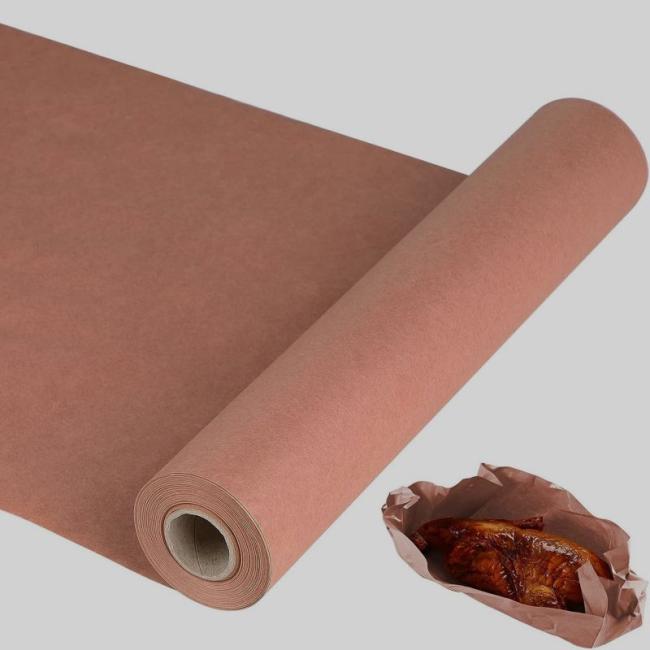
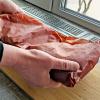
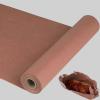
- Base paper: virgin kraft paper (uncoated)
- Basis weight: 70 / 80 gsm
- Colours: natural brown, white
- Format: rolls, width × length
- Roll widths: 30 / 45 / 60 cm
- Roll lengths: 30 / 45 / 50 / 60 m
- Surface: uncoated, no film
- Roll width and length reviewed against your counter or tray
- Basis weight and colour paired to the cut and the service
- Volume and delivery confirmed from the enquiry
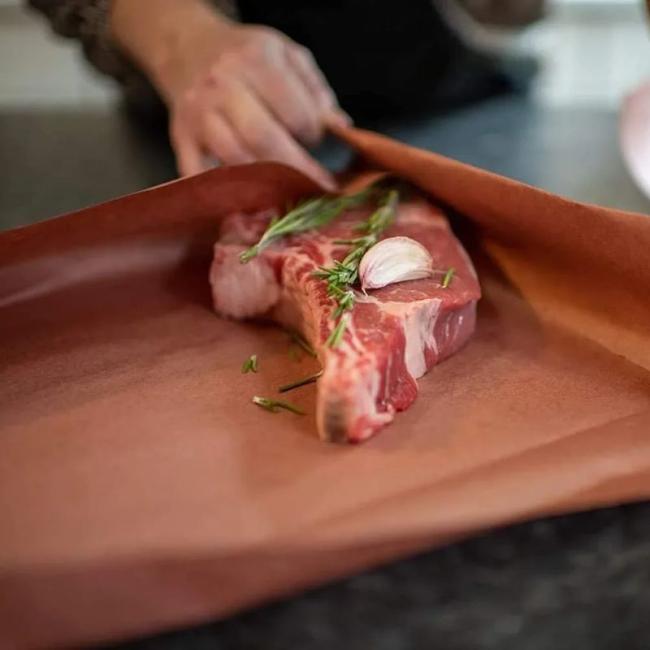
A butcher wraps a cut in paper the customer opens at home, and that paper has one job a bag cannot do: it has to let the meat breathe. Wrap a warm cut in a barrier sheet and the surface comes up damp, the colour dulls, and the paper goes limp against the meat. Use a sheet too thin for a bone-in shoulder and the corner tears while the counter is still busy.
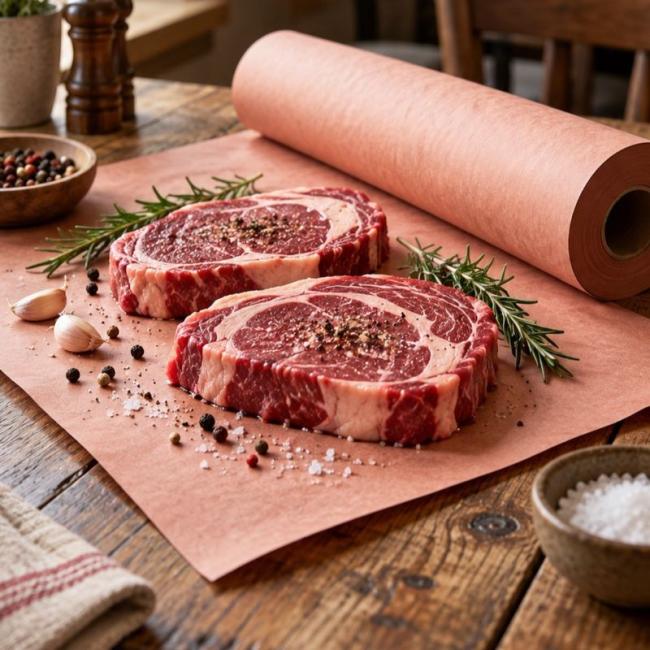
Butcher paper is uncoated virgin kraft, bought by the roll and used by the metre. We supply it in 70 and 80 gsm, natural brown or white, in six roll sizes from 30 cm × 30 m to 60 cm × 60 m. It is slit and rewound on our converting lines, so a counter can take the width it actually wraps with and the length it gets through in a shift, instead of building the job around one stock size. Nothing is coated onto the sheet: how it handles moisture and fat comes from the paper itself, and that is the reason to choose it — or to choose something else.
Where Butcher Paper Is Used
Butcher paper is chosen wherever food is wrapped, lined or carried away and the sheet has to drain rather than seal:
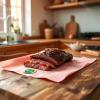
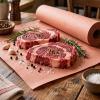
- Butchers and meat counters — cut meat, poultry and offal wrapped at the block, so the surface dries instead of sweating inside the pack.
- Fishmongers and seafood counters — whole fish, fillets and shellfish, where a sheet that takes up drip keeps both the display and the customer's bag clean.
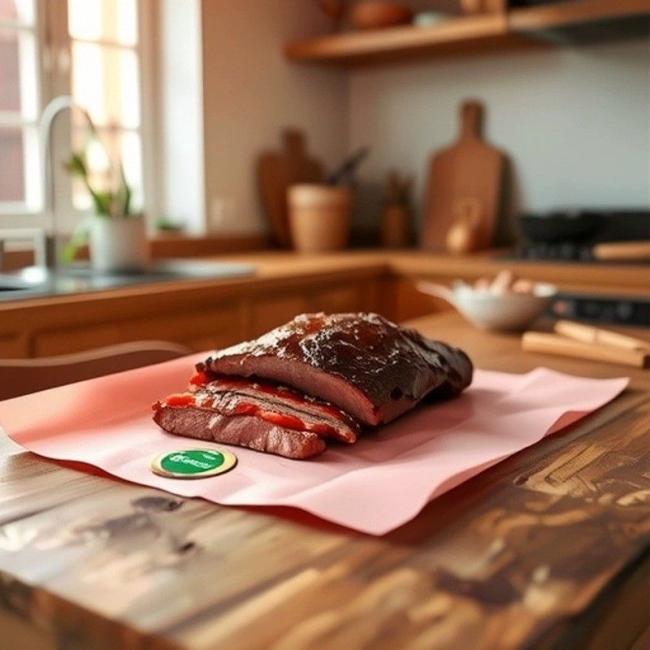
- Barbecue joints, smokehouses and grill restaurants — brisket, ribs and shoulder wrapped through a long cook, with the same paper lining baskets and trays at service.
- Delis, sandwich bars, food trucks and takeaway — short-contact wraps for sandwiches, burgers and fries, where a barrier sheet is more than the job needs.
- Foodservice, catering and casual dining — tray and basket liners, table covering for shared plates, and a surface that goes straight into the bin when service ends.
Butcher paper is the absorbent end of the wrapping range. Where the sheet has to hold fat away from a bag or a table, the paper you want is greaseproof food wrapping paper; where food is lined in an oven, it is pre-cut parchment or a baking paper roll. Counters usually order it with bags, liners and labels in one go — Food Contact & Food Packaging and Foodservice, Catering & Kitchen cover how those are specified together. The rest of the series sits under Food Packaging & Baking Paper.
Key Features
Uncoated, so the sheet breathes
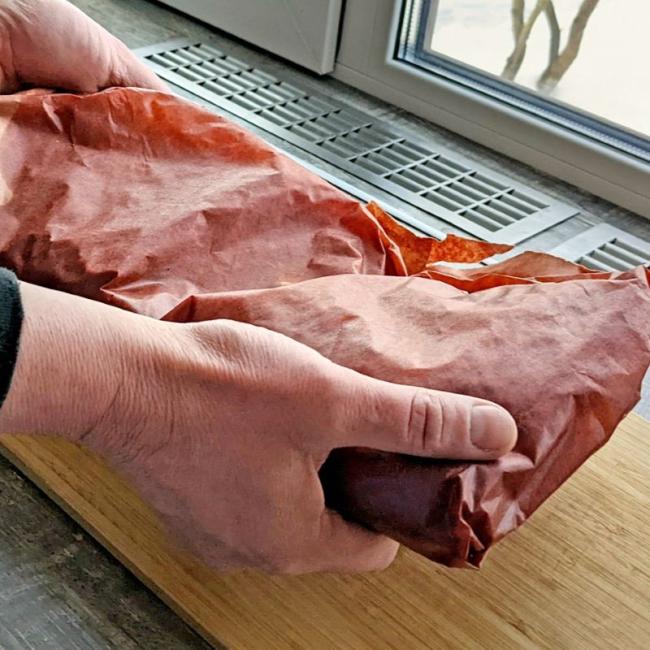
Nothing is laminated to this paper and no barrier is applied to it. Steam passes through the sheet instead of condensing on the inside face, which is why a cut wrapped at the counter keeps its colour, and why the paper stays dry against the meat instead of going slick. In a smoker the same property is the point: a brisket wrapped in butcher paper keeps a firm bark, where a tight barrier steams the surface soft. If the problem you are solving is fat coming through the sheet, this is the wrong paper and we will say so.
70 or 80 gsm, set by what the paper carries
70 gsm is the general wrapping weight: it folds tight around a portion, tears cleanly from the roll, and is what most delis and takeaway counters run. 80 gsm is for the heavier end — bone-in cuts, a shoulder that stays wrapped for hours, a tray liner that has to lie flat under a wet load. Both weights come in both colours, so taking the stronger sheet does not cost you the colour the counter works in.
Six roll sizes from 30 to 60 cm
Width is decided by the wrap, not by the shelf. 30 cm suits one-hand wrapping at the block and small deli portions. 45 cm gives a two-hand wrap around most cuts and is the width most butchers settle on. 60 cm covers trays, baskets and table runs. Lengths run from 30 to 60 m across the six sizes, so a busy counter takes the roll it gets through in a shift rather than changing rolls mid-service.
Natural brown or white, chosen at the counter
Natural brown is the unbleached kraft that butchers and barbecue brands are recognised by, and it hides handling marks through a long service. White keeps the sheet quiet so the cut is the only thing carrying colour in the pack, and it is what a counter hands over when the wrapped parcel is part of the presentation. Same paper, same weights: the choice is how the counter reads, not how the sheet performs.
Technical Specifications
The range covers the roll formats most counters order:
- Base paper: virgin kraft paper, uncoated, 70 / 80 gsm
- Colour: natural brown, white
- Format: rolls, width × length
- Common sizes: 30 × 30 m, 30 × 60 m, 45 × 45 m, 45 × 60 m, 60 × 50 m, 60 × 60 m
- Surface: no applied coating and no film
| Roll width | Roll length | Where it usually goes |
|---|---|---|
| 30 cm | 30 m | Block-side wrapping, deli portions, sandwich counters |
| 30 cm | 60 m | The same counters on a long shift, or a spare roll kept behind the block |
| 45 cm | 45 m | General counter wrap for most cuts |
| 45 cm | 60 m | Busy butchers and food trucks working two-hand wraps |
| 60 cm | 50 m | Trays, baskets and platters |
| 60 cm | 60 m | Table runs, large cuts and barbecue service |
Width and length are chosen together: a 60 cm roll on a block-side wrap wastes paper at every cut, and a 30 cm roll cannot cover a tray. If the format you need is not on the list, describe the counter, the tray and the cut and we will confirm what can be supplied to that size.
How to Select and Order
- Start from what is wrapped — a bone-in shoulder, a whole fish and a sandwich portion pull three different sheets out of the range.
- Set the width by the wrap — 30 cm for one hand at the block, 45 cm for a two-hand wrap, 60 cm for trays, baskets and tables.
- Set the length by the shift — 30 and 45 m for a small counter, 50 and 60 m where the roll is in use all day.
- Fix the weight against the hold — 70 gsm for portions wrapped and handed over, 80 gsm where the sheet stays against the food or carries a wet load.
- Choose the colour at the counter, not in the office — brown where the unbleached look is expected, white where the food should carry the colour.
- Be clear about the barrier — uncoated butcher paper absorbs and breathes; where fat must not strike through, ask for a greaseproof grade instead.
- Send four details — what is wrapped, how the counter wraps it, the colour, and the volume — and the reply covers weight, roll size and packing. Request a quote or sample.
FAQ
Is butcher paper the same as baking paper or parchment?
No. Parchment and baking papers carry a silicone release coating and are made to go into an oven; butcher paper is uncoated and is used for wrapping, for lining trays at service, and for wrapping meat through a slow cook. Using parchment as a wrap wastes the release coating; using butcher paper as an oven liner puts an uncoated sheet against a hot tray. For oven work see Pre-Cut Parchment Sheets, and for a silicone roll see Baking Paper Rolls.
Is butcher paper greaseproof?
No — it absorbs. A drop of fat on uncoated kraft will mark it, and a very fatty cut wrapped for a long time can strike through. That absorbency is what keeps the surface of the meat dry. Where the sheet has to hold grease away from a bag, a table or a customer's hands, use Greaseproof Food Wrapping Paper instead.
Can it be used in a smoker or on a barbecue?
Wrapping meat through a long cook is what it is bought for: the sheet lets steam out, so the surface of the meat stays firm while the paper holds the joint together. It is not a liner for a hot oven tray and it carries no release coating, so it should not be used where the paper itself would sit against a hot surface and bake on.
Which weight and roll should we start with?
Most counters start with 45 cm × 45 m at 70 gsm for hand wrapping and add one 60 cm roll for trays and barbecue service; a butcher cutting bone-in and heavy cuts will usually prefer 80 gsm. Send one cut and one tray with the first enquiry and the sample comes cut to both.
Related: Greaseproof Food Wrapping Paper · Food-Grade Greaseproof Placemat & Tray Liner Paper · Baking Paper Rolls · Food Contact & Food Packaging
Base papers: Food-grade Kraft Paper · Food-grade Unbleached Kraft Paper · Food-grade White Kraft Paper