
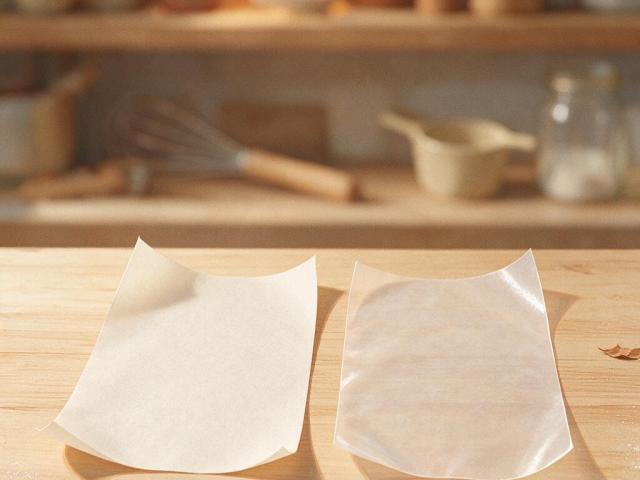
Baking paper and greaseproof paper are two different papers, and swapping them is the most common packaging mistake inside a bakery or deli. Their jobs split on one question only: does this application ever enter an oven?. If the sheet goes into a heated cavity, it needs baking paper; if it only wraps food that stays out of heat, greaseproof paper does the same job for less money. This guide walks the counter and the bake-room so you can place each paper where it earns its keep.
The one-line split
Baking paper is made for direct heat: it survives a hot cavity and releases what was baked against it. Greaseproof paper is made for oil at moderate and chilled temperatures: it stops grease moving onto the packaging and onto the hands carrying it, but it is not built as an oven component. Both stop oil today; only baking paper is built to carry heat as well.
Walk the room: place each paper at its station
The fastest way to choose is to walk your own counters and decide each sheet by where it sits, rather than by the name printed on the box.
- In the oven and beside it. Tray liners, roasting sheets and anything set into a heated cavity run on baking paper.
- At the cold wrap bench. Pastries, oily cooked items and boxed goods transfer oil onto cardboard or fingers — this is greaseproof territory.
- Between layers. Interleaving sheets that separate stacked pieces, kept cool, are a greaseproof use, not a heat use.
Check each station against the question
| Station / task | Does it see heat? | Paper to use | Because |
|---|---|---|---|
| Oven tray liner, roast, sheet bake | Yes | Baking paper | Carries the cavity heat and releases the bake |
| Sticky or syrup-covered bake boxed after a short bake | Briefly, then out | Judge by oil and cost (see below) | Heat no longer governs once it leaves the oven |
| Cold pastry or cooked deli wrap | No | Greaseproof paper | Oil barrier only, lowest cost for the job |
| Layer separation in a chilled stack | No | Greaseproof paper | Barrier without paying for heat capability |
What breaks when you swap them
- Greaseproof paper in the oven. It can scorch and stick, and oil can telegraph through onto the product — heat-stability is exactly what it lacks.
- Baking paper on every cold job. It works, but it is a paper you are paying for nobody needs; a fitted greaseproof grade holds the same cold product at lower cost.
- Reaching for a heavier sheet "to be safe". Weight does not add heat resistance; the parchmentising process does. Match the paper to the function, not to an urge to go heavy.
Run the room on cost per unit area
Because the two papers differ mainly in whether they carry heat, the cost spread is the real cut. A bakery that lines its trays with baking paper and reuses the same sheet to line cold boxes is spending heat-capability money on a job that a greaseproof sheet covers for less. Two grades under one roof — baking paper for anything near heat, greaseproof for the cold bench — usually beats one expensive paper everywhere. Line up the surface area each station consumes in a day and price the pair; the spread makes the split obvious.
When the line blurs
The decision softens exactly at one seam: a glazed or syrup-glazed bake set into a box after a short bake, with no further heat. The contact is greasy and sticky, the packaging never re-enters the oven, and either paper can feel right. Rule of thumb: give the cold bench greaseproof by default and baking paper to anything heated; then whatever misfit you have to think twice about is usually the one you can stop worrying about. Verify the suspected pair with one quick loss-on-stick test on your own product, not a shelf of marketing claims.
FAQ
Is greaseproof paper safe in the oven?
No. It is designed as an oil barrier at moderate and chilled temperatures, not as a heat carrier. Anything that enters a heated cavity should be on baking paper.
Can baking paper stand in for greaseproof for wrapping?
Yes, it resists oil too, but you pay for heat capability you are not using. For cold wrapping a greaseproof grade covers the same product for less.
What about a bake that starts cold and ends hot?
Then it sees real heat during the cook, so treat it as an oven use and run baking paper; check the wet-handling strength with your supplier if it holds moisture early on.
How do I tell which paper I already hold?
Ask for the heat and oil figures with the test method a supplier used, or fold-test a scrap in a hot pan: baking paper survives and pops clean, greaseproof tends to crisp or stick.
Browse the range
Both sides of the split live under baking and food paper. For a room-temperature oil barrier see water-based greaseproof paper and a glossier glassine silicone paper; for oven and release work, vegetable parchment or food-grade parchment.