
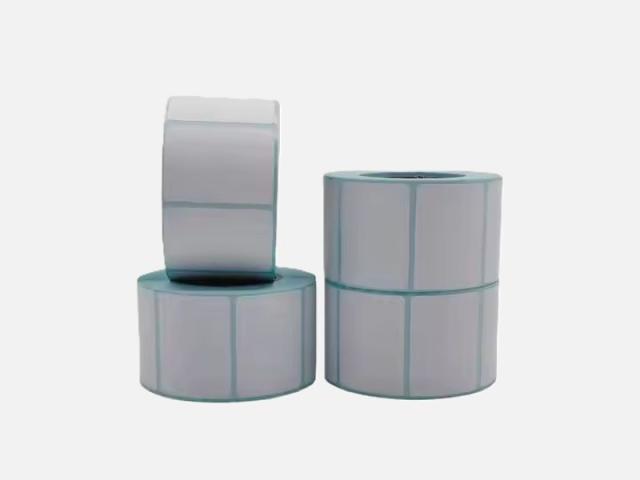
Direct thermal and thermal transfer both print with heat, which is why the names are so often confused. The difference that matters to a buyer is one component: thermal transfer melts ink from a ribbon onto the label, while direct thermal develops the image in a heat-sensitive coating on the label itself and uses no ribbon. That changes label life, usable facestocks, consumables and applications. This guide maps both methods to barcode, shipping, weighing and receipt work, ending with a checklist to send your supplier.
1. The one mechanical difference
Both use the same kind of heated printhead; what passes under it differs.
- Direct thermal (DT). The face paper carries a heat-sensitive coating that darkens where the printhead heats selected dots. Only heat touches the label — no ribbon, ink or toner.
- Thermal transfer (TT). A wax, wax-resin or resin ribbon runs between printhead and label; heat melts its ink onto the facestock, and the spent ribbon becomes a foil roll.
Two consequences follow. DT only works on coated thermal media — plain paper and standard films will not darken — while TT prints on paper and on PP, PET, PE and synthetic films. Hardware is not interchangeable either: direct-thermal-only printers have no ribbon mechanism, whereas TT-capable printers usually run both methods. Check the model before ordering media.
2. Direct thermal vs thermal transfer at a glance
| Factor | Direct thermal | Thermal transfer |
|---|---|---|
| Consumables | labels only | labels plus a wax / wax-resin / resin ribbon |
| Facestock range | coated thermal paper; a few specialist films | paper plus PP, PET, PE and synthetic films |
| Image life | days to a few years indoors; fades under heat, sunlight, oil or PVC contact | designed for years; resin ribbon on film is the durable end |
| Moisture, chemicals | standard grades vulnerable; TOP and triple-proof grades resist more | set by the ribbon–facestock pairing, not the method |
| Daily operation | one roll to change; no ribbon matching | ribbon width and ink type must match the label |
| Typical jobs | parcel shipping, pick-and-pack, weigh-scale, tickets, receipts | asset tags, serial and compliance plates, outdoor and freezer labels |
3. When direct thermal is the right choice
DT is the default when the label has a short, indoor life and the operation values simplicity:
- Parcel and 3PL shipping labels. E-commerce fulfilment and carrier barcodes travel days or weeks and are discarded on delivery; one consumable means one fewer roll change on a busy line.
- Weigh-scale and fresh-food prepacking. Deli, bakery and produce scales print variable weight at the moment of packing — see thermal labels for common roll formats.
- Tickets, wristbands and receipts. High-volume, short-cycle, never archived; checkout rolls live in the thermal receipt paper family.
If a label is discarded before its first summer in a shipping container, the durability gap to thermal transfer never matters.
4. When thermal transfer is the right choice
Choose TT when a barcode must stay scannable for the life of an asset, or the label lives on film in a hostile environment:
- Asset and serial labels on equipment, pallets and returnable containers scanned over years.
- Outdoor, cold-room and industrial settings — freezer racks, drums, machinery, automotive parts — with moisture, oil, solvents or repeated wipe-downs.
- Film facestocks where the job needs waterproofing, tear resistance or a gloss brand surface.
- Small high-density barcodes and 2D codes, where crisp edge transfer on smooth film aids first-pass scanning.
Durability comes from the combination of ribbon, facestock and adhesive, not from the printer. Wax ribbon on paper suits dry indoor shelf labels; resin ribbon on PET handles chemicals and weather; wax ribbon on glossy film smudges regardless of the printer's price.
5. Direct thermal grades: standard, TOP and triple-proof
- Standard DT is base paper with the heat-reactive coating — normal indoor cycles, everyday shipping and till printing.
- TOP (top-coated) grades add a protective layer resisting moisture, oil and plasticizer migration from PVC wrap, for cold-chain and kitchen settings.
- Triple-proof grades are built for wet, oily or wipe-down stations — the three exposures being water, oil and alcohol. Triple-proof thermal labels are specified for kitchens, food processing and cold-chain weigh stations rather than general shipping.
Whatever a datasheet promises, confirm the grade with your own storage trial: print sample barcodes, leave them in the actual carton, freezer or shop window for the real storage time, and scan them at the end with your own scanner.
6. What to send your label supplier
- Printer brand, model, print width and resolution (203 or 300 dpi); DT-only or TT-capable; for TT, the ribbon widths, cores and ink type already in use (wax pairs with paper, wax-resin with coated paper and matte films, resin with glossy films and synthetics).
- Label dimensions, gap or black-mark registration, roll core, outer diameter and winding direction; fanfold if the printer stack takes folded thermal labels.
- The required reading window — days, months or years — and the worst environment on the route: freezer, humidity, oil, sunlight, PVC contact or cleaning chemicals.
- Facestock preference (paper or film), the surface applied to (corrugated carton, plastic tote, frozen wrap), and any pre-printed logo or colour, including white or transparent thermal grades.
- A sample-roll request for on-printer testing, followed by an end-of-period scan trial in the real environment.
FAQ
Can I print thermal transfer labels on a direct thermal printer?
Not on a DT-only model: it has no ribbon mechanism. TT-capable printers run both methods by fitting or removing the ribbon. Confirm your printer model before ordering either media type.
How long do direct thermal labels stay readable?
There is no single figure. Standard grades serve indoor cycles of days to months; TOP and triple-proof grades resist moisture, oil and plasticizer contact longer. Sustained heat and sunlight shorten every grade — set the grade from a storage trial on your own route, not from a datasheet.
Are thermal transfer labels waterproof?
The method alone does not make them waterproof. Resistance comes from the construction: a film facestock such as PP or PET, a matching resin or wax-resin ribbon, and an adhesive rated for the surface. For tough-environment self-adhesive grades, see the functional labels family, including waterproof labels.
Which method costs less per label?
It depends on the job. DT runs one consumable but requires coated media; TT adds a ribbon but opens the full paper and film range. Compare the total cost of your specification — including unreadable labels and relabelling downtime — rather than headline roll price.
Browse the range
Start at the eco labels overview for the full catalogue. The thermal family includes thermal label paper in standard rolls, white thermal labels, transparent thermal labels, colour thermal labels, folded thermal labels and triple-proof thermal labels; checkout rolls are covered under thermal receipt paper. Send the checklist above with your printer model and route conditions, and a specification can be matched before samples go out.