
- Common pad sizes: 500 × 300 mm — up to approx. 3,000 ml per pad; 720 × 320 mm — up to approx. 8,000 ml per pad
- Supply form: cut sheets for trays and export cartons, or rolls for automated packing lines
- Working range: stays flexible and highly absorbent below 0 °C for chilled and frozen logistics
- Backflow control: resists backflow under stacking pressure, so liquid stays in the pad rather than on the product
- Size, basis weight, absorbency and colour
- Pad footprint cut to your tray or carton base
- Private-label and custom printing
Fresh seafood does not stay dry on its own. Within minutes of packing, fish, shrimp, crab and shellfish release mucus, brine and melting ice water — and pooled liquid softens flesh, dulls shells, feeds spoilage bacteria and shortens shelf life before the tray reaches the shelf.
Seafood absorbent pads sit under the product and pull that moisture away the moment it appears. The core is matched to the sticky, protein-rich juices of aquatic seafood, not just plain water, so the tray stays dry and the product keeps its firmness, colour and commercial value through storage and transit.
Where Seafood Absorbent Pads Are Used
Wherever chilled or frozen seafood sits in a tray, box or export carton:
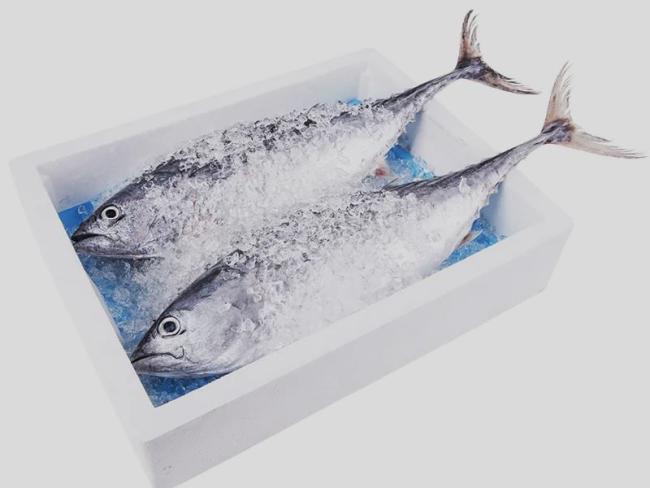
- Fish — whole, fillets and portions, chilled or frozen.
- Shrimp and prawns — tray-packed fresh or peeled product.
- Crab and shellfish — hairy crab, scallops, oysters and clams, which release heavy drip.
- Squid, octopus and prepared seafood — vacuum, MAP and retail packs.
Packing shell-on shrimp for export? See Shrimp Absorbent Pads.
Key Features
High-capacity lock for seafood juice
The absorption core is formulated for the sticky, protein- and polysaccharide-rich mucus and brine that seafood releases, so it takes up far more of what your product actually sheds than a general-purpose pad. Liquid is drawn in fast and held in the inner core; even under stacking pressure it resists backflow and re-wetting.
Keeps appearance and firmness
By removing excess liquid quickly, the pad stops shrimp, crab shells and fish skin from turning mushy, shedding or fading during transport. Each piece stays drier and cleaner, which also reduces flavour transfer and cross-contamination inside the pack.
Cold-chain and transit performance
Materials stay flexible and highly absorbent below 0 °C — they do not stiffen or turn brittle in chilled and frozen logistics. After absorbing, the pad keeps its structure under the weight of the load, helping prevent leaks and breakage on the way to market.
Food-contact safety
Pads are made from food-grade materials that meet international food-contact safety requirements and are non-toxic and odour-free for direct contact with seafood. Versions incorporating a food-contact-compliant functional additive can be supplied where a market requires one — ask for the additive specification and test documentation for your own compliance review.
Technical Specifications
Common sizes for seafood trays and export cartons:
- 500 × 300 mm — up to approx. 3,000 ml per pad
- 720 × 320 mm — up to approx. 8,000 ml per pad
Size, basis weight, absorbency and colour are customisable, and pads can be supplied on rolls for automated packing lines. Contact us for a datasheet with layer structure and absorption data matched to your product type.
Two pad sizes cover most seafood packs; the pair below is the usual starting point. Sheet or roll supply is decided by how the line is fed.
| Pack & product | Common pad size | Absorbency | Why this pair |
|---|---|---|---|
| Fish — whole, fillets and portions, chilled or frozen | 500 × 300 mm | Up to approx. 3,000 ml/pad | Standard tray and carton footprint |
| Shrimp and prawns — tray-packed fresh or peeled | 500 × 300 mm | Up to approx. 3,000 ml/pad | Moderate drip, tray-based packing |
| Crab and shellfish — hairy crab, scallops, oysters, clams | 720 × 320 mm | Up to approx. 8,000 ml/pad | Heavy drip, larger carton base |
| Export cartons, vacuum, MAP and retail packs | Cut to your carton base; rolls available | Sized to the pack | Roll supply keeps an automated line fed |
How to Select and Order
- Match the pad footprint to the tray or carton base so liquid is captured before it spreads.
- Choose absorbency by product type — whole fish and shell-on shrimp release more liquid than fillets.
- Tell us whether you pack by hand or on a line, and your cold-chain window, and we will recommend the right pad.
- EU food-contact packs. Confirm the food-contact basis and the recyclability grade of every layer against the destination market rules — tell us the market and the pack construction and we will confirm the documents you need. Compliance documentation is provided offline on request; we do not publish certificate numbers online.
MOQ, lead time and sample shipping depend on size and volume — send your tray dimensions and target shelf life and we will quote accordingly. Private-label printing is available for retail-branded packs.
FAQ
Are these pads safe for direct food contact?
Yes. They are made from food-grade materials that meet international food-contact safety requirements. Ask us about documentation for your market's compliance review.
Can size and absorbency be customised?
Yes — size, basis weight, absorbency and colour can be adjusted to your tray, product type and packing method.
Do they work in frozen and cold-chain shipment?
Yes. The pads are designed to stay flexible and absorbent at low temperature and are widely used in chilled and frozen seafood export packaging.
Can I get samples before ordering?
Yes. Request samples for a trial pack — send your product type, tray dimensions and line speed and we will recommend a starting specification.
Bofeng New Materials supplies food-grade seafood absorbent pads to seafood processors, exporters and packers, with custom sizes, absorbency and private-label printing. Tell us what you pack and we will spec a pad for your tray.
Get a quote or request samples: jason.zhan@bofmat.com
Related: Seafood Absorbent Pads · Shrimp Absorbent Pads · Fresh Food Absorbent Rolls · Cold Gel Ice Packs · Fresh Food Absorbent Pads
Related reading: Food Absorbent Pads: What They Do in Fresh Food Packaging · Food-Contact Compliance for Absorbent Pads · What Is the Pad Under Meat Made Of?