
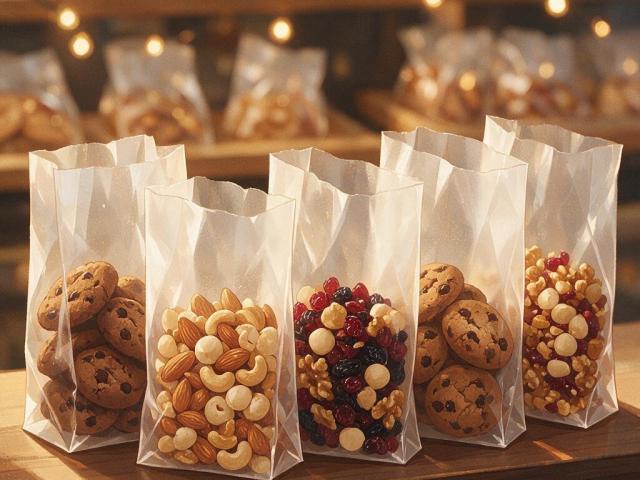
A glassine paper bag is chosen for its gloss and its moisture barrier—a polished, semi-transparent look that flatters dry goods like biscuits, nuts and baked confection. But glassine has a hard boundary: it is a low-grammage paper, so it goes soft under oily or wet contents. The deciding factor is whether your product is dry or carries moisture or oil. Choose glassine for dry, glossy presentation; reach for a greaseproof or lined bag once the content gets wet or oily.
What glassine gives a pack
Glassine is a highly calendered, close-pored paper with a smooth, almost glassy face. Two properties sell it for bakery and confection:
- Gloss: a bright, polished surface that flatters shortbread, biscuits and confectionery.
- Moisture barrier: the dense sheet slows moisture exchange, keeping crisp goods crisp longer in a dry pack.
The same density that gives the barrier is also why oils and wet spots soak through and soften the bag—the boundary is the point of the choice, not a flaw.
How to check dry-fit
Typical ranges (always confirm with a batch test):
- Grammage: glassine bags are typically lighter than kraft; confirm the bag holds shape with your fill.
- Moisture: fine for dry contents; a wet or oily product will migrate and soften the sheet—do not assume a barrier you did not test.
- Food-contact compliance: the grade must be declared suitable for the intended contact under the relevant market rule.
Choosing by content
| Content | Gloss | Moisture barrier | Oil resistance | Best bag |
|---|---|---|---|---|
| Dry biscuits, shortbread, cracked goods | Yes | Good | Light | Glassine |
| Nuts, granola (dry) | Can work | Good | Low | Glassine, confirm fit |
| Light-oil bakery (buttery cookies) | Partial | Best kept dry | Not reliable | Greaseproof or lined |
| Oily or moist items | Not recommended | Softens | Not reliable | Greaseproof paper bag |
Read across from your content. If dry and crisp, glassine gives the gloss; once oil or moisture is in the mix, a greaseproof paper bag is the safer frame.
Presentation and opening details
Because glassine's value is largely visual, how the bag opens and closes matters as much as what goes inside. A windowed or open-top style shows the glossy product while the close-pored sheet holds its shape; a folded or adhesive top keeps the crisp goods sealed. Check the sheet's stiffness with the opening you intend—glassine is lighter than kraft, and an airy open-top on a soft sheet will bag up rather than stand.
Pair the presentation with a small dry fit before you commit a run: fill a sample with your real product, hold it the way a customer would, and confirm the gloss holds and the bag stands on the shelf. It is a quick test that avoids ordering a face and getting a sack.
Common misuses and boundaries
- Using glassine for oily goods. The dense paper does not hold oil; spots soften and the bag loses shape.
- Expecting long freshness through glassine alone. The barrier slows moisture change; it does not replace a proper atmosphere or a coated insert when a pack must hold for a long period.
- Judging by the face. Gloss is appearance; keep the grease and moisture decision separate from the look you want.
FAQ
Can glassine bags hold oily food?
Not reliably—the dense paper goes soft where oil or moisture settles. Use a greaseproof bag for oily contents.
Is glassine a good choice for crisp biscuits?
Yes; the close-pored sheet slows moisture, which helps keep shortbread and biscuits crisp in a dry pack.
How does glassine compare to kraft for shelf presence?
Glassine offers gloss and a translucent face; kraft reads as natural and carries heavier loads. The choice is presentation and form—see the glassine release paper note for the material background.
Do I need a special closure for glassine?
Glassine takes standard twist or adhesive closures; confirm the sheet's stiffness suits your chosen opening and closure style.
Browse the range
Glassine paper bags for the glossy dry edge of the range, and greaseproof paper bags once oil is in the mix. Start the whole line at eco paper bags.