
- Paper: food-grade greaseproof or silicone-coated paper; selected grade confirmed for the intended bake
- Optical brightening agents: none in the specified paper
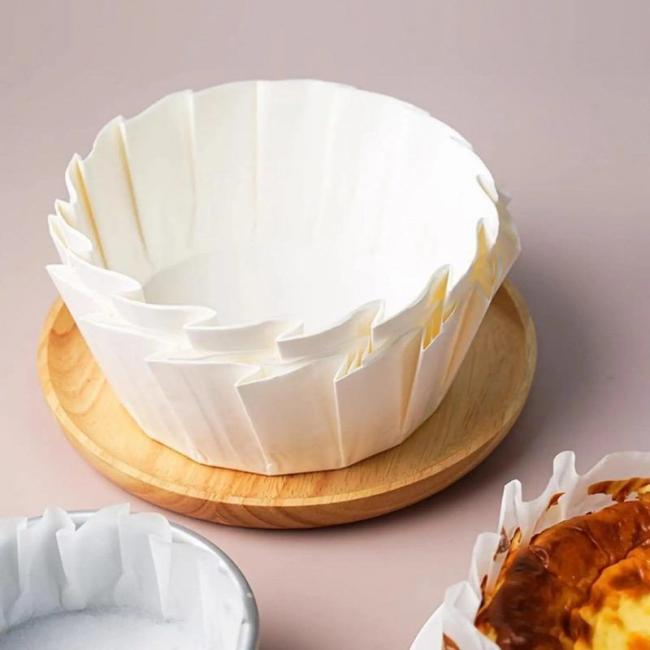
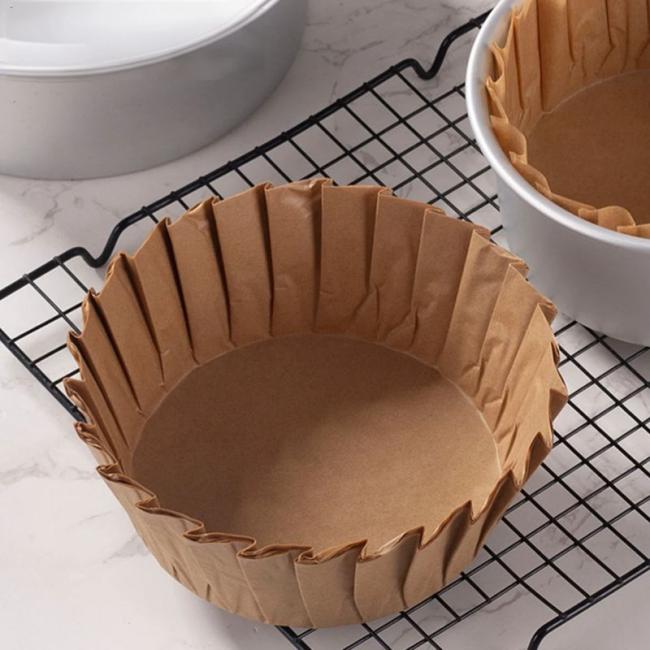
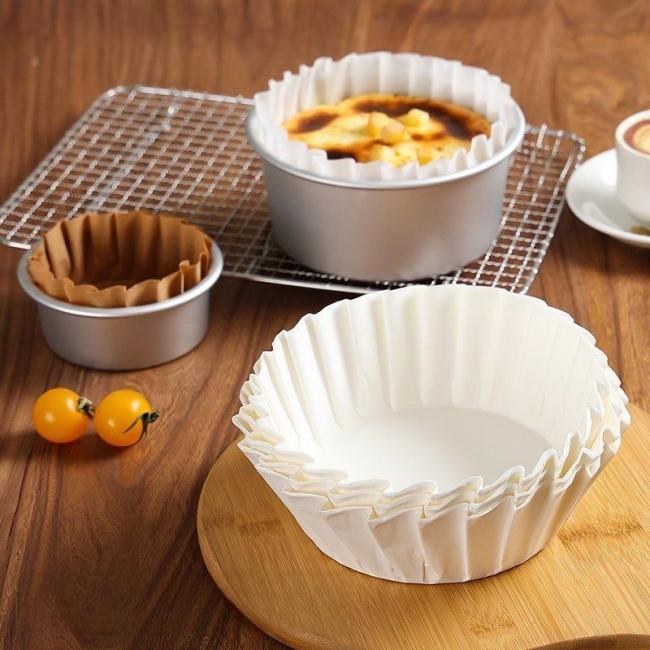
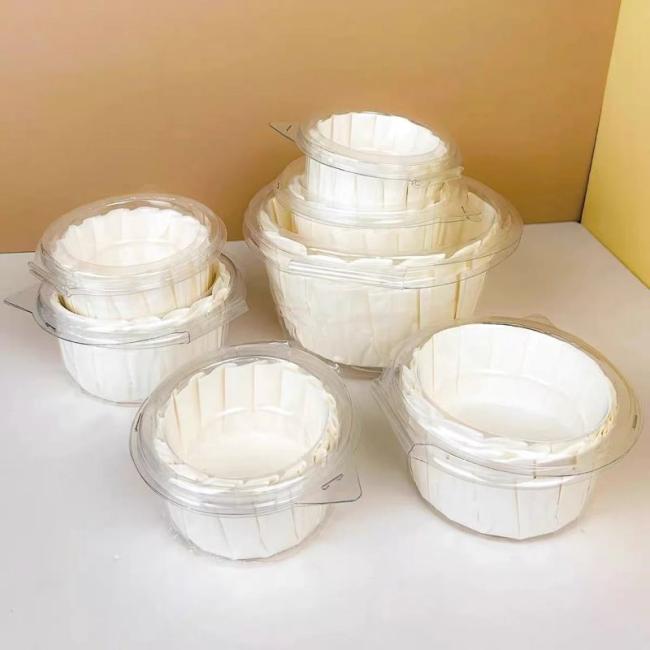
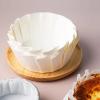
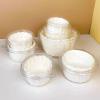
- Form: pre-pleated liner for round tins
- Size labels: 4 / 5 / 6 / 8 inch
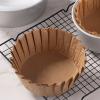
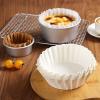
- Colours: natural brown or white
- Pack options: 4 and 5 inch, 50 / 100 pieces; 6 inch, 30 / 50 / 100 pieces; 8 inch, 25 / 50 / 100 pieces
- Packing: size-specific packs, including 100-piece packs, or bulk cartons
- Use conditions: temperature, time, recipe and cooling process confirmed for the supplied construction
- Diameter and collar requirements for deep or unusual tins
- Paper and release construction selected for the recipe and process
- Printing and artwork reviewed for the chosen paper and print position
- Pack configuration for cafés, retail or production
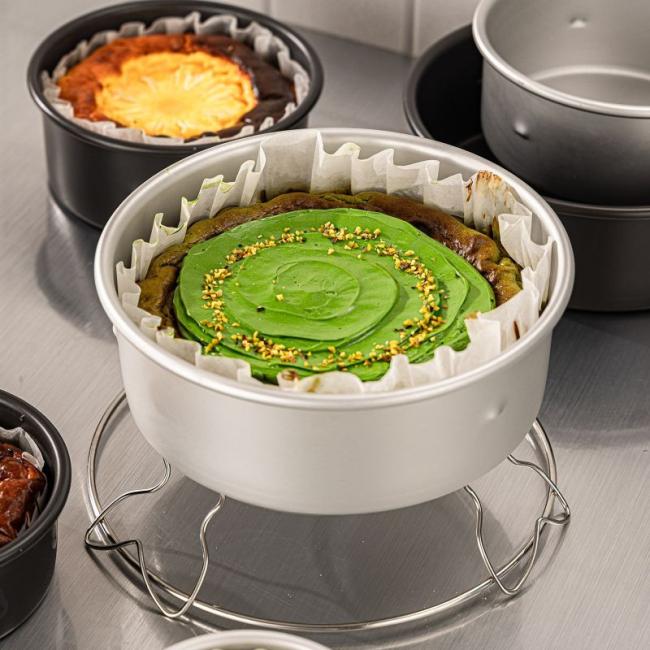
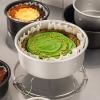
Pre-pleated Basque cheesecake liners give a round cake a crumpled paper collar while reducing the folding needed at the bench. Select the liner by the tin, recipe and baking process, then trial the supplied paper before agreeing production.
Where Basque Cheesecake Paper Is Used
- Cafés and dessert bars serving cheesecake by the slice.
- Bakeries making moist cheesecakes and custard-style bakes.
- Central kitchens seeking a repeatable liner format across sites.
- Retail and private-label home-baking packs.
- Other deep-tin desserts proposed for a trial with the actual recipe.
Related products and uses: Pre-Cut Parchment Sheets · Cake Cups & Liners · Baking & Food Paper · Steamer Liner Paper
Key Features
Technical Specifications
The specification panel contains the size and packing options. Confirm the following for the selected construction:
- Opened fit, collar height and pleat shape.
- Paper grade and any release coating.
- Baking temperature, exposure time, cooling and handling conditions.
Material references for selection; confirm the actual supplied paper and treatment: vegetable parchment paper in rolls
How to Select and Order
Send the tin drawing or measurements, cake type, baking temperature and time, required quantity and destination. Add colour, pack preference and artwork if printing is needed. Check a sample through filling, baking, cooling and removal before approving the agreed format.
FAQ
Can the liner be used at any Basque baking temperature?
Confirm temperature and time for the actual supplied grade. A result from one paper sample does not establish the performance of every liner construction.
Will it always release without greasing?
Release depends on the paper, recipe and process. Trial the selected liner with your bake and handling method before deciding the preparation routine.
Can you match a deep or unusual tin?
Share the internal base diameter, side depth and desired collar. Custom dimensions and forming requirements can then be reviewed.
Can the same liner be used for another moist dessert?
Treat a different filling or process as a separate use to check. Compare the sample after the intended bake and cooling cycle.