
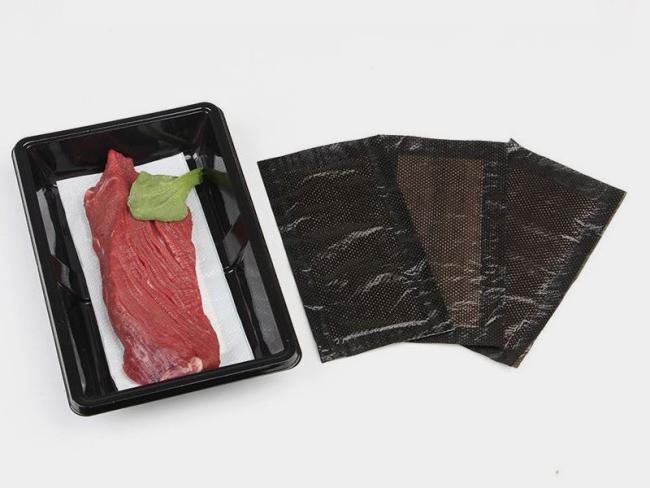
Meat soaker pads is a high performance moisture absorbing material designed for food processing, especially meat processing. Its main function is to absorb and lock the excess moisture released during packaging, storage and transport of meat, keeping the surface of meat dry and clean, thus extending the shelf life of the product and enhancing the visual appeal and safety of meat for consumption.
Product features
Highly efficient moisture absorption: Adopting special fibre structure and high molecular moisture absorber, it can quickly absorb and lock the blood and other liquids secreted by meat, avoiding the meat from being soaked in its own secretion, and reducing the environment for bacteria to breed.
Maintain freshness: By reducing the humidity on the surface of meat, it effectively inhibits the growth of microorganisms, prolongs the freshness period of meat, and ensures the freshness and taste of meat.
Enhance appearance: The surface of dried meat looks more attractive and has a more natural colour, which helps to increase consumers' desire to buy.
Easy to use: Meat soaker pads are usually designed to be placed directly inside or underneath meat packages, which is easy to use, requires no special treatment and will not pollute the meat.
Environmental protection and safety: the selection of food safety standards in line with the material made of non-toxic and harmless, will not affect the original flavour of meat, and part of the product can be degraded, in line with the requirements of environmental protection.
Scope of application
Food processing industry: It is suitable for all kinds of meat (such as beef, pork, lamb, chicken, etc.) before processing and packaging.
Supermarket and retail: used in the display of pre-packaged meat to enhance the effect of commodity display.
Cold chain logistics: During the refrigerated transport of meat, it can effectively control the humidity inside the package and reduce the deterioration problem caused by excessive moisture.
Family Kitchen: also suitable for family users when storing meat, in order to keep the refrigerator clean and meat fresh.
How to use
Preparation: Choose the right size of meat absorbent mat according to the size and shape of the meat.
Place the absorbent pads: lay the pads flat under the meat or in direct contact with the surface of the meat to ensure that they can effectively cover and absorb excess water.
Packing and sealing: After using the meat soaker pads, seal them in time to achieve the best preservation effect.
Regular checking: During storage or transport, check the moisture absorption of the absorbent pads regularly and replace them with new ones if necessary to maintain a good preservation environment.