A professional kitchen consumes packaging faster than any other setting, and it consumes several kinds at once. The steamer line needs liners, the beverage station needs filter bags, the pass needs greaseproof bags, the labelling station needs thermal labels, and the prep area needs pads. Ordering them as five separate items is how specifications drift apart.
Four Families in One Kitchen
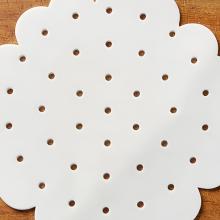
- Steamer liners and kitchen paper - the liner sits between the food and the steamer or tray, so wet strength and heat tolerance matter as much as grease resistance.
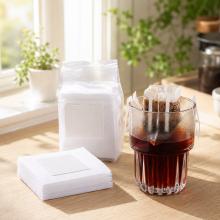
- Coffee drip filter bags - a food-contact filter with its own requirements: filtration behaviour, seam integrity under hot water, and how it holds its shape during brewing.
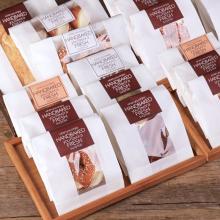
- Greaseproof bags - the pass and takeaway surface. Barrier and seam strength decide whether the portion reaches the customer without marking the outer pack.
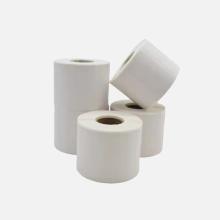
- Thermal labels and prep pads - labels for date and batch marking, pads for drip control in the prep and holding areas.
Product families: baking and food paper, eco paper bags, eco labels and fresh absorbent pads.
What to Settle in the Specification
- How the item is dispensed. A liner or filter that is awkward to separate slows the line down more than a small difference in price per unit ever costs.
- Peak load, not average load. Kitchen packaging is consumed in bursts; the specification should hold at the busiest hour.
- Contact time with hot liquid or steam. This is the variable that separates a liner that holds from one that collapses mid-service.
- Whether the item is used for holding as well as serving, since holding times are longer and often warmer.
- Batch and date marking requirements, which determine the label format and the printer it has to run on.
- Storage conditions in the kitchen itself - a stockroom next to a hot line is not a dry store.
Where Kitchen Specifications Go Wrong
- Specifying for the average service and buying for the peak. The failure always happens at the busiest moment, which is also the most visible one.
- Assuming all greaseproof is interchangeable across stations. A bag for the pass and a liner for the steamer are not solving the same problem.
- Choosing labels the kitchen printer cannot run. Format is decided by the equipment on the labelling station, not by the product.
- Leaving storage out of the brief. Packaging stored in a warm, humid back-of-house behaves differently from the same product stored in a warehouse.
FAQ
Can kitchen paper and coffee filters come from the same supplier?
Yes, and it is worth specifying them together, because both are food-contact items chosen against the same service conditions - hot water, steam, and short contact times.
What matters most in a steamer liner?
Wet strength under steam, followed by heat tolerance and grease resistance. A liner that performs well dry can still break down partway through a service.
How do we choose between greaseproof and parchment for the pass?
By the contact time and the food's fat content. The two behave differently over longer holding periods, which is usually where the choice actually matters.
Do kitchen labels need to survive moisture?
They should be specified for the surface they are applied to, which in a kitchen is often damp or oily. Adhesive behaviour on that surface decides whether the mark is still readable at the end of the shift.