
- Substrate types: BOPP, BOPET, CPP, etc.
- Common thicknesses: 25–50 μm
- Aluminium coating thickness: approx. 30–50 nm
- Oxygen barrier: ≤1.5 cm³/m²·24h·atm
- Moisture-vapour barrier: ≤1.0 g/m²·24h
- Printing compatibility: gravure, flexographic, screen
- Finishes: high gloss, matte, semi-matte
On a crowded shelf, a pack often wins by how it catches the light — a coffee pouch with a soft metallic glow, a cosmetic bottle that reads as premium before the shopper picks it up. At the same time, the product inside may depend on the label to be kept from oxygen, moisture vapour and light. A plain printed film label delivers neither effect strongly: it prints flat, and its barrier is the substrate's alone.
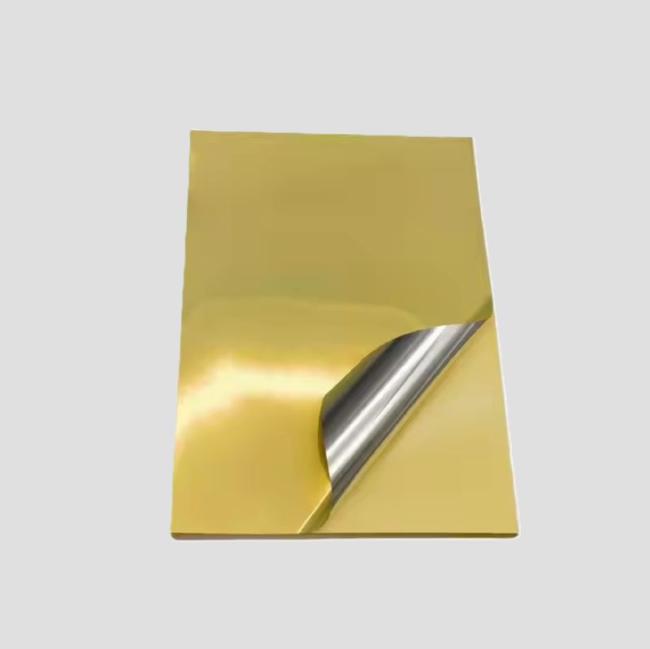
We supply aluminized (vacuum-metallized) film labels: a nano-scale aluminium layer, roughly 30–50 nm thick, vacuum-deposited onto a BOPP, BOPET or CPP film. The metal layer returns a mirror-like metallic sheen that lifts the pack on the shelf, and at the same time it raises the construction's barrier to oxygen and moisture vapour. The thin film stays flexible and easy to apply, so the label sits between a plain film label and a pure aluminium-foil label — with the metallic look at a lower material cost than aluminium foil.
Where Aluminized Film Labels Are Used
Metallized film labels for packs that sell on metallic sheen and need protection from oxygen, moisture and light:
- Food packaging — snacks, coffee, condiments and similar packs that benefit from a light- and oxygen-barrier face on the shelf and in the pantry.
- Personal care — shampoo, skincare and detergent bottles where the metallic gloss raises the perceived quality of the product.
- Pharmaceutical — outer labels and cartons where legible printing and a barrier face support the primary pack.
- Beverage — beer and premium bottled drinks where the metallic finish adds shelf prestige.
- Electronics and retail — labels on consumer electronics and gift-style packs, where a metallic, high-tech look suits the brand.
For a pearlescent, mother-of-pearl sheen on cosmetics, the related Pearlized Film Labels cover that finish; where true dynamic holographic anti-counterfeiting is required, that is the laser-film line — see Laser Film Labels, kept separate from this page. This page covers the aluminized metallic-look + high-barrier option.
Key Features
A mirror sheen that sells on the shelf
The nano aluminium layer (about 30–50 nm, vacuum-deposited) returns high, mirror-like reflectance, so the pack reads as metallic and premium at first glance. The metal layer also gives printing a bright base that lifts colour saturation and contrast.
Barrier that protects the contents
The metallized layer measurably reduces transmission of oxygen (≤1.5 cm³/m²·24h·atm) and moisture vapour (≤1.0 g/m²·24h), and it also blocks UV. For snacks, coffee and sensitive foodstuffs this supports a longer shelf life; for cosmetics and daily chemicals it keeps contents from degrading in the light.
Flexible and converting-friendly, unlike foil
At nano-scale thickness the film keeps the pliability of its substrate (BOPP, BOPET or CPP), so it is less prone to tearing and wrinkling than pure aluminium foil and applies cleanly as a label. The surface takes gravure, flexographic and screen printing, and resists oils, weak acids and weak alkalis, suiting food and daily-chemical contact.
A cost-effective route to a metallic look
The metal is only nanometres thick, so material use is minimal. The result carries a similar metallic appearance to pure aluminium foil at a lower material cost — without the stiffness and cost of a full foil construction. Because the aluminium layer is so thin, metallized films also keep a low overall material footprint; where the pack construction allows, they can be routed with the base polymer's normal recycling stream rather than as a separate foil layer.
Technical Specifications
- Substrate types: BOPP, BOPET, CPP, etc.
- Common thicknesses: 25–50 μm
- Aluminium coating thickness: approx. 30–50 nm
- Oxygen barrier: ≤1.5 cm³/m²·24h·atm
- Moisture-vapour barrier: ≤1.0 g/m²·24h
- Printing compatibility: gravure, flexographic, screen
- Finishes: high gloss, matte, semi-matte
The substrate follows the pack; the finish follows the shelf. Typical starting points:
| Use | Substrate | Finish | Barrier role |
|---|---|---|---|
| Food packaging — snacks, coffee and condiments | BOPP, balancing cost and flexibility | High gloss | Oxygen and light barrier on the shelf and in the pantry |
| Personal care and household — shampoo, skincare and detergent bottles | BOPP or CPP | High gloss, or semi-matte for a softer metallic | Metallic gloss raises the perceived quality of the product |
| Pharmaceutical — outer labels and cartons | BOPET, for strength and temperature resistance | Matte | Legible printing plus a barrier face on the primary pack |
| Beverage, electronics and gift packs — beer and premium bottled drinks, consumer electronics | BOPET or BOPP | High gloss | Metallic, high-tech look at the point of sale |
The aluminium coating is roughly 30–50 nm on a 25–50 μm film, with an oxygen transmission rate of ≤1.5 cm³/m²·24h·atm and a moisture-vapour rate of ≤1.0 g/m²·24h. It is printable by gravure, flexographic and screen processes, and supplied as self-adhesive rolls or sheets.
How to Select and Order
- Choose the substrate to your pack — BOPP balances cost and flexibility for food and daily-chemical labels; BOPET adds strength and temperature resistance for pharma and premium packs; CPP offers a cast surface for specific converting lines. State your container and fill line and we will advise.
- Match the barrier to your product — oxygen- and moisture-sensitive food, or light-sensitive cosmetics, benefit from the metallized layer.
- Specify the finish and format — high-gloss for maximum shelf reflect, or matte for a soft metallic feel; self-adhesive rolls or sheets as your line requires.
FAQ
- What is the difference between an aluminized film label and a pure aluminium-foil label? Aluminium foil is a thick, stiff metal sheet; an aluminized film is a polymer film (BOPP/BOPET/CPP) carrying only a ~30–50 nm aluminium layer. The film keeps the flexibility of the polymer, applies like a normal label and costs less in material than foil, while still giving a metallic look and a strong barrier.
- How high is the barrier? For the metallized construction we quote oxygen transmission ≤1.5 cm³/m²·24h·atm and moisture-vapour transmission ≤1.0 g/m²·24h. Tell us your product and target shelf life and we will confirm the grade fits.
- Which printing methods work on the metallized face? The coated face prints by gravure, flexographic and screen printing; the metal layer provides a bright base that supports colour. State your print method and we will confirm the surface treatment.
- Is this page the same as the holographic laser labels? No — this page covers the aluminized metallic-look, high-barrier label. If you need dynamic holographic anti-counterfeiting effects, that is the separate laser-film line (see Related).
- Can I test the sheen and barrier under my own conditions first? Yes — request samples, run them through your printing, illumination and pack test, then confirm the specification before you order.
Bofeng New Materials supplies aluminized (vacuum-metallized) film labels to brand owners, label converters and packaging buyers as part of its Eco Labels range — a metallic-look, high-barrier option between a plain film label and aluminium foil. Tell us your substrate, barrier target and print method and we will confirm the film, coating and format for you.
Get a quote or request samples: jason.zhan@bofmat.com
Related: Film Labels · Pearlized Film Labels · Laser Film Labels