
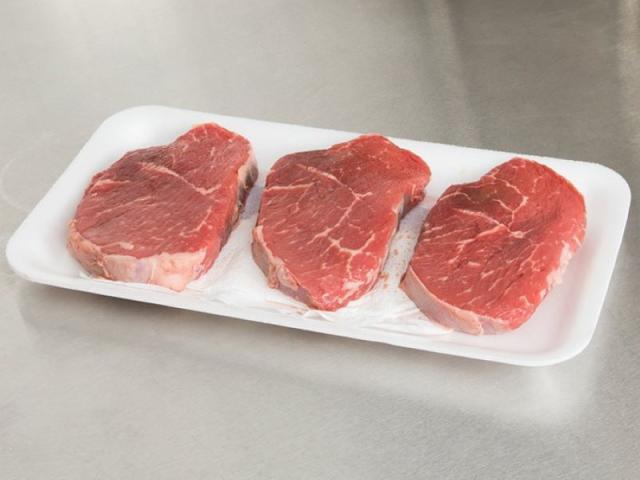
On an export or long cold chain, the absorbent pad under the meat is the only layer that keeps draining after the carton is sealed — no one can reopen the pack to wipe a tray or swap a soaked pad, and the meat keeps releasing purge as long as it is stored. So redundancy matters more than a tidy spec, and behaviour under stacking and temperature swings matters more than a brochure absorbency number. This guide maps an absorbent pad for meat packaging to those pressures and lists what to confirm before you commit a shipment.
1. Why a short-chain pad is not automatically an export pad
On a short chain, from the packer to a nearby case-ready counter, the pad mainly deals with purge from the first hours, and its job is mostly over by the shelf. A long chain adds water the pad was not sized for:
- Temperature swings. The meat keeps releasing purge and the headspace keeps holding moisture, so every chill break or re-chill step can condense more water on the meat and the tray base.
- Long stacking. Cartons sit stacked for the whole trip; a pad that never weeps in a one-day test can weep later under load.
- Vibration. Road and sea motion slides the pad and can leave part of the drainage area uncovered.
Spec the pad for the longest leg, not the first hours, and confirm no-weep under your real stacking pressure. For the basics of matching capacity to the cut, see our meat soaker pad guide.
2. Three directions when a meat pack moves to export
The tray keeps its retail footprint; what changes is the reserve the pad must carry:
- Lift the capacity band and treat it as reserve. Choose a construction whose tested capacity sits above your measured purge, so a condensation spike does not saturate it, and confirm with a purge test that reproduces your longest dwell.
- Cover the drainage area and keep the pad centred. The pad should lie flat on the tray base, clear of the edges where condensate pools; the footprint is a measured decision against your tray’s inner base, not a guess.
- Choose a structure that keeps working under compression. A barrier back stops soak-through to the tray base, and a well-encapsulated core resists being flattened into a weeping sheet. Paper or non-woven-only pads lose usable reserve under long stacking.
For a high-volume export line, ask about fresh food absorbent rolls instead of die-cut sheets — a roll keeps placement consistent and cuts manual handling.
3. Air versus sea: different stresses, same discipline
Air and sea stress the pack differently. Air is handled many times — sortation, loading, possible inspection — so the risk is repeated handling and reopening. Sea means a longer dwell with steadier but longer stacking, and container temperature is not a single value across a voyage. State the temperature range you expect and purge-test toward its warmer end.
4. Choosing by chain leg
| Chain leg | Where the extra water comes from | What fails first | Direction to spec |
|---|---|---|---|
| Local short haul | purge in the first hours | puddles on the tray base | standard capacity band, simple purge test |
| Regional refrigerated van | purge plus chill condensation | weeping under stacking | lift one band, test under stacking |
| Sea container, long dwell | slow purge, re-condensation, long stacking | weep and soak-through on lower trays | redundant capacity, barrier back, centred fit |
| Air freight long chain | many handlings, possible re-open | pad shifted, pack reopened | robust placement, agreed purge acceptance |
Every band here is relative — your own purge test decides which one your pack needs.
5. Agreeing the acceptance picture before you ship
The failure that matters is the pack that arrives with liquid outside the pad when the buyer opens the carton. Agree the acceptance picture in writing before shipping — how the receiving pack should look and what the pad should have contained. If a leak claim comes back, your first evidence is the purge test you ran and the tolerance you agreed, so keep the batch result.
6. FAQ
Will temperature swings make the pad weep?
Condensation adds water the pad was not sized for, and stacking pushes it out again if the core saturates. Test with a chill-and-recover cycle that mimics your chain, not a single constant temperature.
If the pad arrives crushed flat, is it still working?
A crushed pad has lost capacity and wicking space. Prefer a structure that keeps its loft under load and confirm no-weep after a stacking test. Crushed pads with dry trays may pass; crushed pads with liquid outside them mean the reserve was too small.
For a long chain, is paper or non-woven safer than SAP?
Both have trade-offs. Paper and non-woven wick quickly and breathe, but hold less and lose reserve under long compression; SAP holds more per gram and gel-locks, yet its uptake of salted meat purge is lower than its uptake of clean water. Which is safer depends on your liquid, dwell and stacking — test, do not assume.
Can I simply stack two pads under an export tray?
Two pads add capacity but raise the pack height, change the pressure each pad feels and add cost. Check that the stack does not push the meat into the seal. A single pad with adequate reserve is usually the cleaner answer.
7. Take it further
For a meat line that travels, start from meat absorbent pads and confirm your chain-specific choice with a purge test; on an automatic export line, ask about fresh food absorbent rolls.