
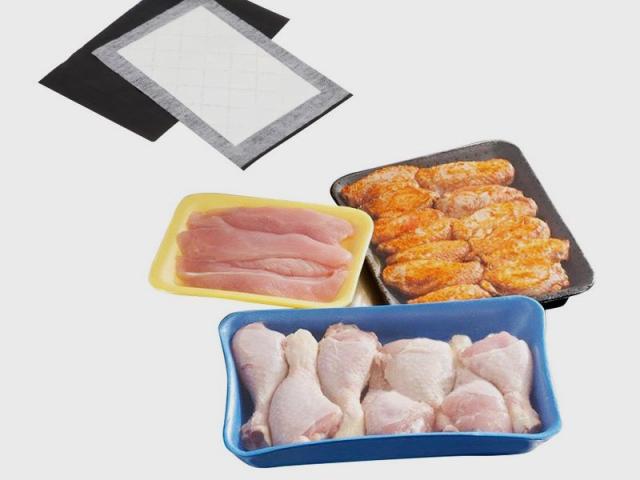
Whether a backroom tray needs a pad comes down to two things the customer will actually see: whether the pack leaks onto the shelf or the display case, and how the pack looks the moment it is opened. This guide works through meat trays re-packed in a supermarket backroom — when to pad, how to fit the pad for a cold-display case, and when you can leave it out.
1. Failure modes that show up in a backroom
Backroom re-packing tends to repeat the same mistakes, and all of them are visible at the shelf:
- Pad too small. Purge runs past the pad edge, onto the tray, then out onto the display shelf.
- Absorbency too low. The pad saturates early in the day and the tray rim collects a film of liquid.
- Pad displaced. It slips over the meat or bunches in a corner, so the tray looks wrong and leaks at the edge.
- Handling. A pad gripped across its absorbent face carries whatever was left on the previous tray.
2. The cold-display view
In a retail case the pad is visible, so it is part of the pack's appearance, not just plumbing. Two things decide how it reads:
- Coverage. A pad that matches the tray base reads as tidy; a visibly smaller one can look like an afterthought even when it holds enough.
- How dry it stays. A saturated pad darkens and draws attention. Choosing a tier that holds the real purge with margin keeps the tray looking dry — but the tier is still set by purge testing, not by appearance alone.
Do not under-size a pad for the sake of the display — a pad that leaks defeats its only purpose.
3. Keeping the backroom flow fast
- Keep a case of pads at the packing bench, in the size and tier the spec calls for, so staff do not improvise with whatever is on hand.
- Batch the re-trays. When several trays are re-packed together, one pad size and tier across the batch keeps the changeover quick.
- One handling rule. Take the pad by its edge, place it absorbent-side up under the meat, and do not touch the absorbent face — a one-line habit that keeps the pad clean and consistent.
4. A decision table by backroom scenario
| Backroom scenario | Pad? | Tier to start from | Display note |
|---|---|---|---|
| Fresh cut-to-order tray sold the same day | Optional | Light tier, small pad | Short dwell; re-check near closing |
| Overnight pre-packed trays for the case | Yes | Medium tier with margin | The pad has to last hours in the case |
| Promotion bulk tray, stacked | Yes | Heavier tier | More stacking pressure and longer dwell |
| Cooked or ready-to-eat deli portions | Case by case | Light tier | Food-contact must match the product; confirm the drain need |
Start from the table, then set the final tier with a purge test over the tray and dwell time your case actually uses.
5. When you can leave the pad out
A pad is not mandatory everywhere. It earns its place only where purge is real and dwell is long enough for it to show:
- Cut-to-order trays sold within hours and re-wrapped often — a pad adds little.
- Drained product held on a rack or draining tray that sheds most liquid before packing.
- Trays emptied and re-used the same day, where nothing sits overnight.
Leaving the pad out is a working decision, not a claim about the product. Check the shelf through the day: if liquid is pooling in the tray or the case, that tray needs a pad again.
6. FAQ
Who carries the risk if a tray leaks in the case?
That is settled between the store and whoever packs the tray. Agree the tray, the pad spec and the expected dwell up front — a leak at the shelf is usually the visible end of a spec that was never agreed.
How thin can a display pad be?
As thin as still holds the purge your trays actually release. Measure that first with a purge test over the real dwell, then choose the smallest pad that passes — small for appearance, adequate for the job.
How do pre-packed trays from the packing plant fit in?
If the plant already packs with a pad, the backroom only re-trays when stock is split or re-wrapped. Keep the same pad spec on re-packed trays so the pack does not change behaviour mid-case, and confirm the spec with whoever supplies the pre-packs.
How does the pad get onto the purchase order?
Treat pads as a specified line item, not a consumable bought by habit. The guide on reading specs and writing an RFQ walks through what to put on the order.
7. Where to look next
Our meat absorbent pads line is the meat hub, and the supermarket absorbent pads line covers the retail pack. For first-pass sizing, start with the entry guide to trays and cuts.