
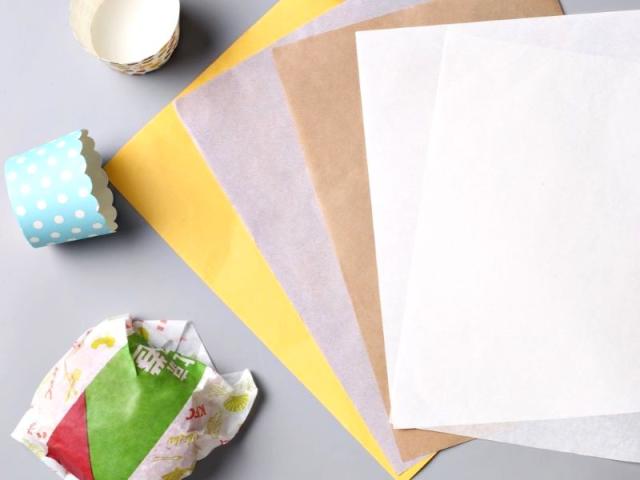
Greaseproof paper and barrier paper are often compared in food packaging projects, but they solve different problems. Greaseproof paper is mainly selected to control oil and fat migration. Barrier paper is selected when a package also needs resistance to water, moisture, sauce, heat sealing, or a stronger PFAS-free compliance story.
Quick Difference
| Requirement | Greaseproof paper | Barrier paper |
|---|---|---|
| Oil and grease resistance | Good for bakery bags, sandwich wraps, liners and dry oily foods | Good to excellent, depending on coating system |
| Water and sauce resistance | Limited unless treated or coated | Designed for water, moisture, sauce and mixed-food contact |
| Heat sealing | Usually not heat-sealable by itself | Available with heat-sealable coating structures |
| PFAS-free positioning | Must be verified by supplier declaration and test data | Commonly specified as PFAS-free for modern food packaging programs |
| Typical applications | Burger wraps, bakery liners, tray liners, parchment-style papers | Cups, lunch boxes, wraps, takeaway containers, frozen or moist food packs |
What Is Greaseproof Paper?
Greaseproof paper is a dense paper designed to slow oil penetration. It is useful when the food is oily but not very wet, such as burgers, fries, bakery items, buttered pastries, deli wraps, parchment liners and tray liners. For many simple wrapping jobs, food-grade greaseproof paper is still a practical and cost-effective choice.
For baking and release applications, buyers may compare greaseproof paper with silicone-coated parchment paper. Parchment is more focused on release, heat tolerance and baking use, while greaseproof paper is more focused on oil holdout in everyday food packaging.
What Is Barrier Paper?
Barrier paper adds a functional layer or treatment to paper so it can resist oil, water, moisture, sauce or sealing requirements. This makes it more suitable for demanding food packaging, especially where a paper-based replacement for plastic-coated board is needed.
Common options include water-based barrier coating paper, water-based coated burger wrappers, and PHA-coated greaseproof paper. For a broader material strategy, see our guides to water-based barrier coating paper, PHA-coated paper, and PFAS-free barrier paper.
When to Choose Greaseproof Paper
- Choose it for dry or moderately oily foods where oil resistance is the main requirement.
- Use it for burger wraps, bakery bags, sandwich wrappers, tray liners and parchment-style liners.
- Consider it when the packaging does not need heat sealing, high water resistance or long wet-food holding time.
- Ask for PFAS-free declarations if the product will be used for food contact in regulated markets.
When to Choose Barrier Paper
- Choose it when the food contains water, sauce, steam, condensation or mixed oil-and-water contact.
- Use it for paper cups, takeaway lunch boxes, burger wrappers, frozen food liners and coated food-service board.
- Select heat-sealable barrier paper when the converting process requires sealing, pouching or closed packs.
- Use it when your brand needs a clearer PFAS-free, plastic-reduction or recyclable-paper packaging claim.
Buyer Recommendation
If your package only needs oil holdout, start with greaseproof paper and verify grease-resistance grade, food-contact compliance and PFAS-free status. If your package must handle water, sauce, heat sealing or tougher distribution conditions, move to a barrier paper structure and test it with real food, filling temperature, holding time and converting equipment.
Bofmat can help compare greaseproof paper, water-based coated paper and PHA-coated paper for specific food packaging projects. Browse our paper packaging material range or request samples for grease, water, heat-seal and food-contact testing.