
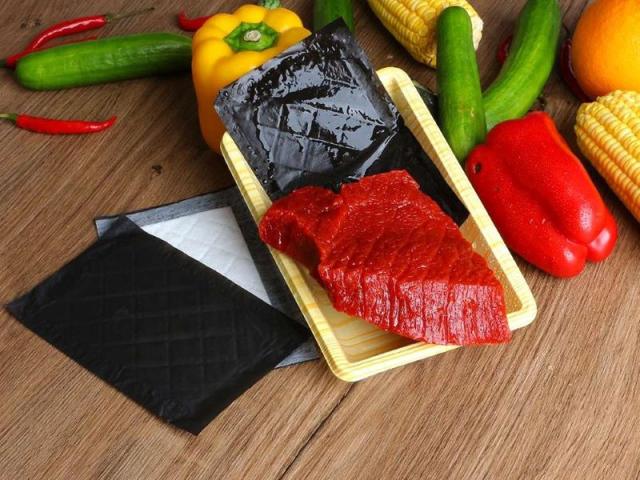
The same cut of meat can sit on two very different trays the same morning: a retail display tray, where the buyer opens the pack at arm’s length, and a foodservice pre-pack that is stacked in a kitchen cooler and opened by a cook. The pad that flatters the first can fail the second, and the pad that survives the second can crowd the first. This guide separates the two jobs — retail display and foodservice — so you can put the right kind of meat tray absorbent pad under each instead of one compromise under both.
1. The retail display tray: the pack is the salesperson
In retail display the buyer sees the product before buying, so the pad must support the pack’s appearance as well as its hygiene:
- Lie flat and stay put. A pad that rides up, folds or curls at the edges draws the eye to the pad instead of the meat.
- Stay out of the view of the product. Display packs want the cut visible, so a smaller, well-placed pad beats a larger one that hides the meat.
- Read as dry. The pad’s visible job is to keep the tray base looking clean; absorbency is chosen so the pack never leaks in its display life, not so it absorbs an extreme amount.
- Behave at the edges. Weep around the rim or under the film is what a shopper notices first, so edge behaviour beats a headline capacity figure.
2. The foodservice pre-pack: function first
Foodservice packs travel to a kitchen or prep area where nobody chooses by look:
- Bigger portions and heavier stacking. A large roast or a stacked tray of portions needs capacity and no-weep under load, not a tidy edge.
- Wider temperature swings. From cooler to prep counter to transport, condensation and purge both appear, so reserve matters more than cosmetics.
- Strength over appearance. The pad is often hidden under the product; how it holds together under handling and keeps the tray base clean for the cook matters more than how it looks.
- Fast, rough handling. Packs are opened quickly, sometimes with utensils, so the construction should keep its integrity rather than shed material onto the meat.
3. Retail display versus foodservice: side by side
| Dimension | Retail display tray | Foodservice pre-pack |
|---|---|---|
| Main job of the pad | keep the pack looking clean and dry at first sight | contain purge and weep through storage, stacking and transport |
| How the pad looks | flat, centred, visually quiet | largely irrelevant — function carries it |
| Capacity thinking | sized so the pack never leaks in its display life | sized with reserve for portion, stacking and temperature swings |
| Placement | clear of the meat and the pack edges | under the product where the liquid gathers |
| Typical misuse | pad too large, crowds the pack and covers the meat | pad too small, weeps in the cooler or the transport bag |
4. If one plant supplies both channels
Keep the two as separate spec lines even with a shared supplier. They share construction families and food-contact rules, but the retail line should be set for appearance and placement while the foodservice line is set for capacity and strength. A blended “one pad for both” usually over-specifies one channel and under-specifies the other. Running two lines through one supplier also lets you combine freight and reuse the same compliance paperwork.
5. Common mistakes
- Using a display pad on a foodservice pack, then finding under-capacity the first time a cooler stack weeps.
- Using a foodservice pad on a premium display tray, then finding it crowds the pack and hides the cut.
- Assuming one size band fits both, when the sizing logic differs between the two worlds.
6. FAQ
What should a hotel cooler use for large bulk portions?
Foodservice logic: capacity and no-weep before appearance, sized to the bulk tray, then confirmed with a stacking purge test. A display-minded pad would be under-capacity for that stack.
Will shoppers complain that the display pad “steals the show”?
It happens when the pad is over-large, printed too boldly, or riding up over the meat. Keep the retail pad centred and visually quiet and it will not compete with the product.
Is it cheaper to use one pad for both channels?
Often not. A blended pad over-specifies one channel and under-specifies the other, and the failure usually shows up as returns or claims. Two clear spec lines are usually cheaper than paying for the wrong compromise twice.
Does a takeaway or delivery bag still need a pad?
If the pack travels in a bag to the final eater, the leak target moves to the bag: the same “no leak for the trip” logic applies, and the choice follows the liquid and the journey.
7. Take it further
The meat line as a whole is covered by meat absorbent pads, with foodservice-specific formats under foodservice absorbent pads. If you are new to meat-tray absorbency decisions, start with the meat soaker pad guide before you split retail from foodservice.