
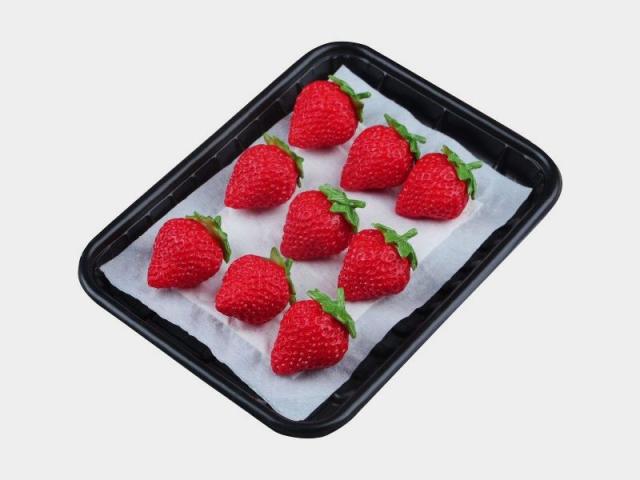
Whether a fruit pad belongs in a produce pack is decided by one question: what is the pack’s likely failure mode — wet rot from condensation or seepage, or drying out? A fruit pad only works on the first. It catches free water and keeps it off the fruit; it cannot stop shrivelling, and it cannot fix a box that turns wet because it is sealed without airflow. So a pad is not automatic equipment — it is a decision. This guide covers when to pad, when not to, and a scenario table to route a pack quickly.
1. When a produce pack usually needs a pad
A pad earns its place when moisture will appear and sit against the fruit during the trip:
- A long cold chain or an export leg — several days, stacking, and temperature swings.
- Chilled fruit that sweats, with condensation already showing on the film or lid in trials.
- Juice-prone fruit — ripe berries and stone fruit — that will be stacked.
- Fruit where free moisture on the skin speeds decay.
2. When you can leave the pad out
A pack can usually run without one when:
- The chain is short — roughly harvest-to-retail within a day, with little stacking and few temperature swings.
- The pack is well vented, or uses a modified atmosphere that already controls humidity.
- The fruit fails from dryness — shrivelling, wilting, desiccation.
- Temperature control is strong enough that condensation does not form.
3. Pad or no pad: route the pack by scenario
| Pack scenario | Pad or no pad | Main reason |
|---|---|---|
| Local, next-day delivery (24 hours) | usually no pad | little time for condensation to form; keep the pack light and vented |
| Regional, a few days in the cold chain (3–5 days) | light pad likely | condensation and stacking begin to matter; a light sheet keeps the base dry |
| Air freight or a long export chain | pad recommended | stacking pressure plus condensation risk; confirm the pack with a sample trial |
| High-humidity leafy greens and herbs | do not pad | free water here is a venting and drying problem; a pad traps moisture |
The scenario is only a starting point — confirm it with the real pack, the real chain and a sample.
4. Common missteps on both sides
- Padding a box that is not vented. A pad collects water but does not create airflow, so it can trap humidity and make fruit sweat.
- Not padding while stacking fruit that seeps. Juice stains and spreads to the packs below; a light sheet under juice-prone fruit protects the whole stack.
- Padding fruit that is already wet or decaying. A pad manages moisture from sound fruit; it does not make damaged fruit acceptable.
- Treating the pad as a freshness tool. A pad manages free moisture; it does not extend freshness by itself — cooling and hygiene preserve the fruit.
5. FAQ
How do I tell whether a specific pack needs a pad?
Run a short trial on the real chain: pack representative boxes exactly as they will ship, then check on arrival. If water has collected on the film or at the base, or the lower fruit is wet while the pack was not crushed, the pack needs moisture control. If the fruit has shrivelled instead, the failure is dryness and a pad will not help.
Will a pad look as if we are hiding rot?
Not when it is used normally. A pad manages the free moisture a sound pack produces; it does not mask decay. Sort out damaged fruit before packing and keep the pack vented.
Do we still need a pad when the truck is refrigerated?
Refrigeration lowers condensation but does not remove it: door openings, stacking and dwell time still create moisture, and juice from stacked soft fruit still seeps. Judge by the temperature swings and stacking your chain actually applies, and confirm with a sample pack.
If we do not pad, what can replace it?
Absorbent tissue or paper under the fruit, vented trays and film, and careful loading that avoids crushing. Each trades something away — tissue holds far less than a pad, and vents only work while air can move. Confirm with a sample.
6. Where this guide fits
Fresh absorbent pads is the overview of the family. When a pack does need one, the sister guide explains choosing and placing a fruit pad by fruit type; the fruit line itself is on the fruit absorbent pads product page.